
The Celestiq gives Cadillac a serious claim on the most expensive end of the luxury car business, but a serious claim is not yet a successful car. A hand assembled electric hatchback from Warren, Michigan, has to earn its place beside machines whose makers have spent decades attending to the last objection a wealthy customer might raise. Cadillac does not need this car to survive. It needs it to prove something its successful SUVs and remarkable sports sedans cannot quite prove for it: that a Cadillac passenger car can be bought for its comfort, workmanship, and distinction without the price requiring an explanation.
The price now makes that examination more demanding. As of September 20, 2026, Cadillac’s U.S. Celestiq page advertises a starting price in the low $400,000s. The roughly $340,000 figure associated with early coverage belongs to an earlier proposition, not today’s advertised starting point, and neither number is the final price of every commissioned car. Cadillac announced its first customer delivery in June 2025. This is no longer an exercise in admiring a concept while forgiving everything that production might eventually spoil.
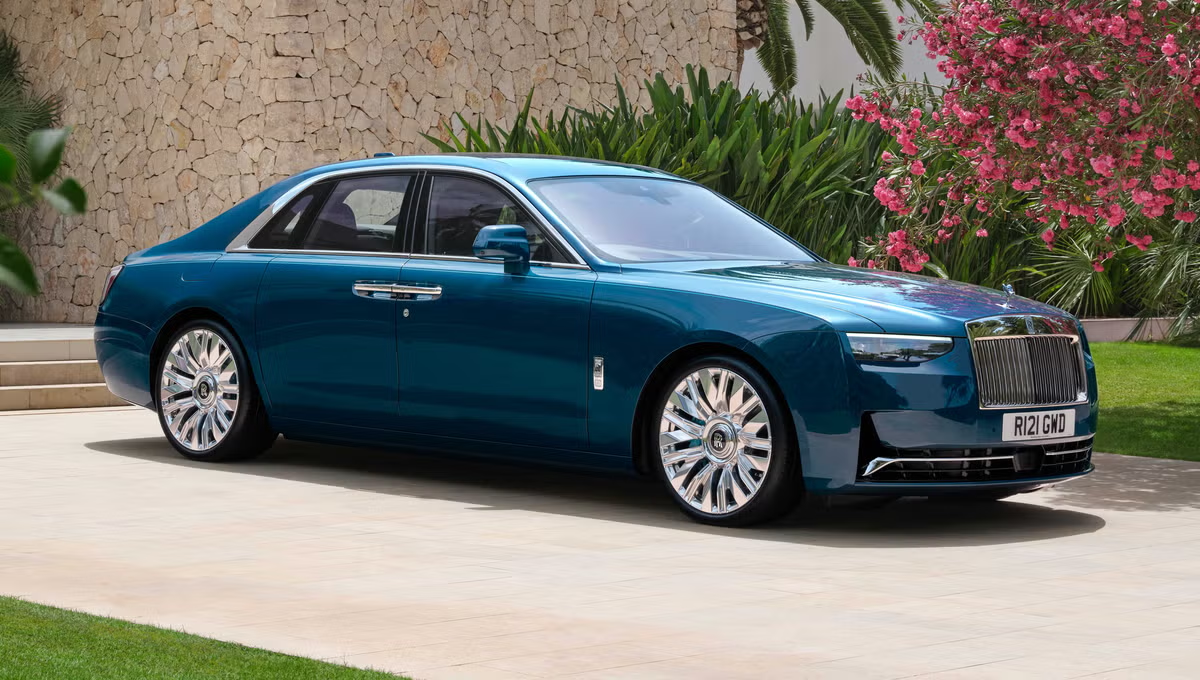
Rolls-Royce supplies two useful comparisons rather than one convenient symbol of expensive motoring. The Ghost tests what a four door flagship does for its passengers. The electric Spectre tests whether propulsion can become almost imperceptible, although its two door body answers a different practical brief. Neither comparison can be settled by counting cylinders, screens, or hours of handwork. Cadillac is asking to be judged on the same awkward details: the disturbance that reaches a seat cushion, the room available for a passenger’s feet, and the switch that feels slightly less expensive than the surrounding leather.

The old V12 and V16 Cadillacs belong in this discussion because they made elaborate machinery serve an intelligible purpose. More frequent power strokes, carefully controlled valve operation, and enough torque to move substantial coachwork offered a route toward smoothness. The cylinder count was spectacular, but the intended experience was not. An electric motor offers a different route to the same destination. Cadillac’s historical advantage is not a proprietary right to excess. It is a body of experience in making excess useful, interrupted by some expensive demonstrations of the opposite.

The Celestiq’s shape immediately puts usefulness under scrutiny. It is 217.2 inches long on a 130.2-inch wheelbase, with four individual seats rather than a rear bench. Cadillac quotes 81.9 inches of width with the mirrors folded and 89.9 with them extended. The long roof and rear opening give it a useful alternative to a conventional trunk, with a quoted 31.6 cubic feet behind the seats and a small additional compartment up front. Yet length does not guarantee passenger freedom. In Top Gear’s January 2026 comparison, Ollie Kew found the rear foot space restrictive, particularly the inability to extend feet beneath the front seats. Visually, the descending roof gives the car continuity and movement; the broad rear face then makes that movement stop rather abruptly. The body is distinctive, but 217.2 inches of length and four seats make restricted rear foot space harder to excuse.

The name and the promise
Cadillac’s name presents an older version of the same problem. Antoine Laumet was not the provincial lawyer of the tidiest retellings. Detroit Historical Society’s account places him in North America as a coastal trader before he adopted the grander identity of Antoine de la Mothe, sieur de Cadillac. His adopted title implied a family history he did not possess. An impressive name could introduce a man to the right people; it could not retroactively supply the family history implied by the introduction.
There is an appealing impropriety in a great American manufacturer borrowing the identity of a Frenchman who had improved his own credentials. The crest cannot transfer two centuries of accumulated reputation into the modern car by itself. Buyers eventually encounter something less negotiable than the story: a machine and the people responsible for keeping it working.
Henry Leland gave the automotive name a firmer foundation through manufacturing precision. The important contrast is not between an allegedly dishonest aristocrat and an engineer whose private beliefs can conveniently be made to support a modern slogan. It is between a claim of distinction and a repeatable way of demonstrating it. Cadillac’s early achievement was to make components fit without depending on the particular workman who had first assembled them.

Laumet’s establishment of Fort Pontchartrain du Détroit in 1701 explains the name’s relationship to Detroit. The motor company adopted that connection two centuries later. A local historical reference became the badge of an industrial product, which then acquired a reputation substantially more useful to car buyers than the founder of the settlement’s ancestry. Cadillac’s reputation came from the accuracy and interchangeability of its cars, not the authenticity of its namesake.

That distinction is particularly relevant when a modern manufacturer sells a commissioning experience. The appointment, the materials library, and the personal attention can genuinely make an expensive purchase more satisfying. They cannot repair an uncomfortable seating position or a poorly resolved control. The ceremony belongs around a finished car, not in place of one.

The company formed in 1902 from the remains of the Henry Ford Company, with Leland central to its manufacturing development. Its early reputation did not depend on producing every component slowly or making each car different from the next. Quite the reverse: consistency was an achievement. That history makes Cadillac an unusually interesting manufacturer to charge hundreds of thousands of dollars for a car assembled by hand.
The Celestiq is not simply a Lyriq with a more elaborate invoice. Its structure uses six large aluminum sand castings, not the high pressure die castings often discussed elsewhere in the EV industry. Those castings combine functions that would otherwise require more individual pieces, and they work with a fabricated structure and distinctive bodywork. Shared GM electric technology supplies part of the car’s technical foundation without dictating the entire vehicle. The worthwhile question is what the dedicated construction permits: different geometry, material choices, and a production process suited to very small numbers.
Additive manufacturing serves similarly specific purposes. GM’s April 2025 account identifies more than 130 printed components, including metal and polymer parts. The conspicuous metal piece in the steering wheel is its center, not an entire printed steering wheel. Printing allows intricate shapes and integrated details without conventional tooling for each variation. Subsequent machining and finishing still determine what the customer sees and touches. A laborious process is not automatically a luxurious result. Sometimes it is simply the sensible way to make a part that will never justify a production die.

The record behind the reputation
Cadillac’s 1908 Dewar Trophy demonstration provides a concrete example of interchangeability. Three cars were dismantled under Royal Automobile Club supervision, their parts mixed, and 89 pieces replaced with spares before reassembly. The rebuilt cars then completed a 500-mile test. Interchangeability was the accomplishment, not the existence of a patient mechanic capable of persuading mismatched parts to cooperate. The modern counterpart would be a commissioned car whose replacement components fit just as convincingly as its originals.

The 1957 Eldorado Brougham introduced a different set of temptations. Air suspension could maintain the car’s level as its load changed; an elaborate cabin and stainless roof made the expense immediately visible. Those are different kinds of value, and neither has to invalidate the other. A luxury car may reasonably include an unnecessary delight. Delightful details add value only after essential systems such as suspension, climate control, and body hardware work reliably.

The ordinary Cadillacs of the following decade offered a less theatrical version of the argument. Their wide seats, automatic transmissions, climate equipment, and formal bodies described a recognizable way of traveling. The advertising could show a Cadillac without first explaining what sort of person was supposed to want it. That clarity came from features working together, not from an obligation to make every car the largest possible expression of itself.
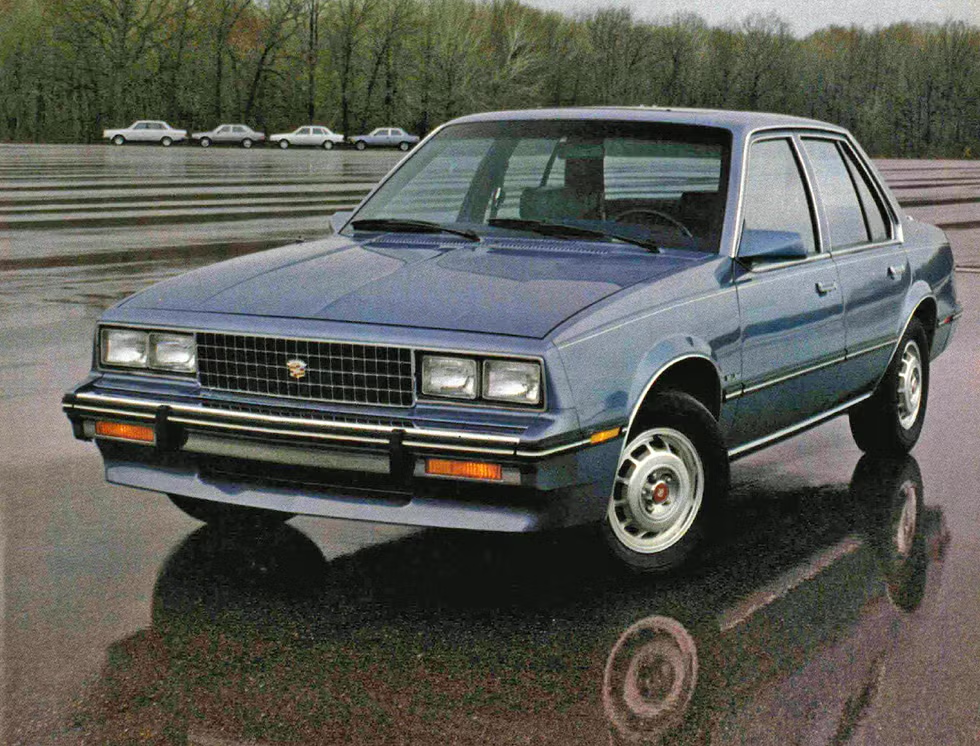
The Cimarron exposed a very different relationship between price and product. Its compact dimensions were not the offense. The shared proportions and conspicuous resemblance to GM’s cheaper J cars made the premium difficult to separate from the badge. It is possible to use inexpensive components intelligently. It is much harder to charge for distinction when the customer can recognize the alternative across the showroom parking lot.
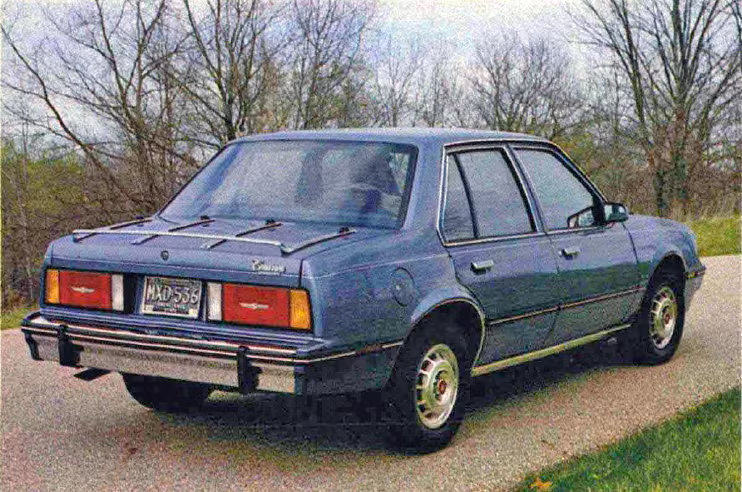
Shared architecture can improve a luxury car by spreading development expense and making replacement parts easier to source. The finished vehicle still has to deliver isolation, accommodation, controls, and workmanship that its cheaper relatives do not. Unique castings cannot compensate for poor isolation or awkward controls, and shared battery technology does not prevent exceptional workmanship or comfort.

The Allanté poses the reverse problem. Its Italian bodywork and transatlantic production route were conspicuously expensive, yet neither guaranteed a better convertible. Flying the body across an ocean made a wonderful explanation of the manufacturing process. The owner still had to close the roof. That is a useful warning for a Celestiq commissioning presentation: the itinerary of the part is less important than its behavior after delivery.

The XLR offered another legitimate attempt at differentiation, combining its Corvette relationship with a Cadillac engine, retractable hardtop, and sharply drawn body. Those choices gave it more substance than a change of badges. They also made the cabin a particularly demanding part of the proposition. When the exterior promises a special object, ordinary looking controls and unconvincing trim become more conspicuous, not less. An expensive structure does not make the pieces nearest the driver exempt from inspection.
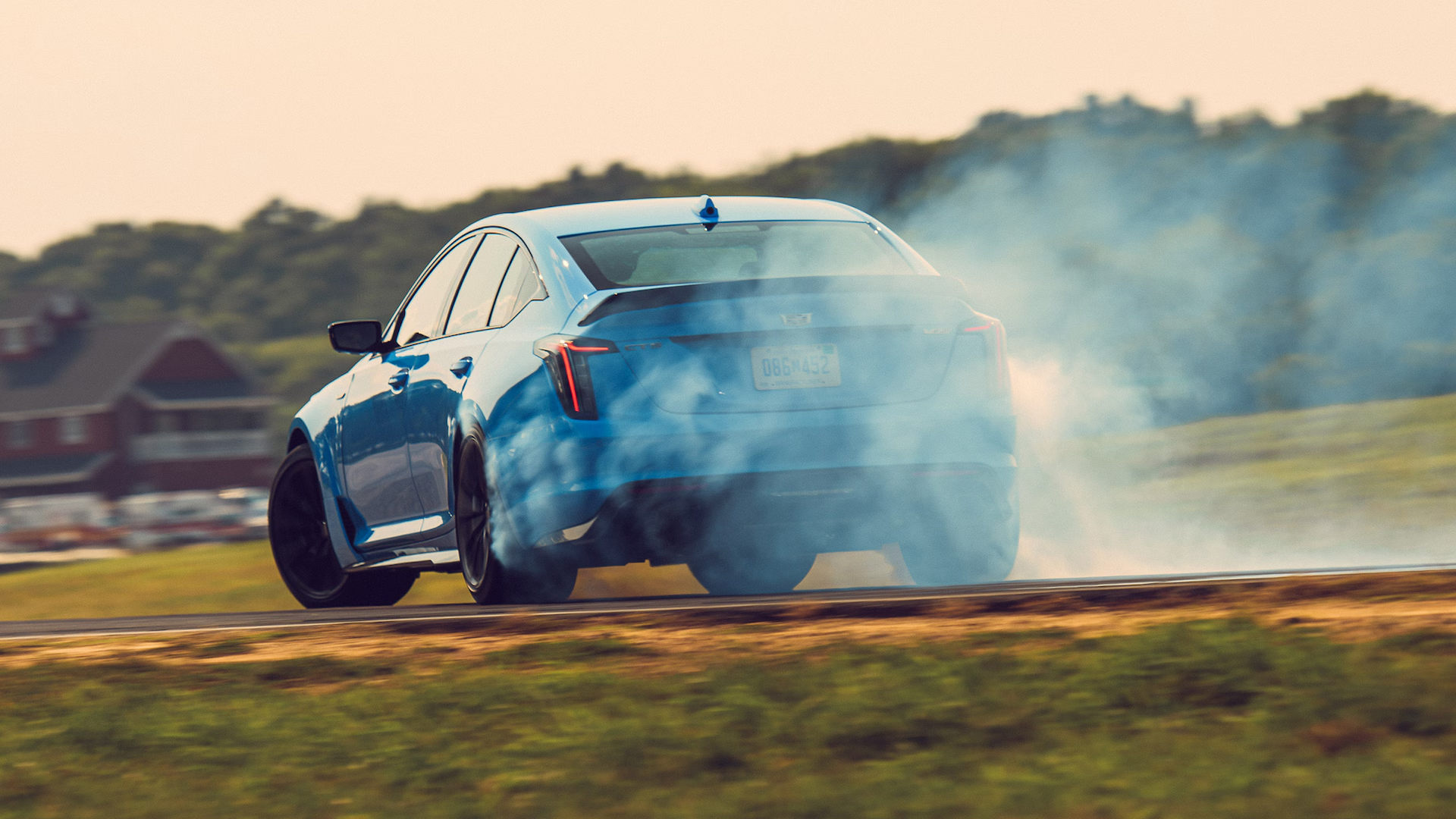
The CT5-V Blackwing establishes that Cadillac can resolve a difficult mechanical brief. Its supercharged V8, rear drive, and available manual transmission are not merely nostalgic equipment. Together they give the driver unusually direct responsibility for a powerful sedan. That says nothing about the Celestiq’s ride quality. A manufacturer can know how to make a car respond beautifully to its driver and still have work to do on making another car leave its passengers alone.

The Lyriq supplies a more relevant connection to ordinary customers. Its electric drivetrain and distinctive cabin have reached buyers in numbers a commissioned flagship will not approach. GM reported 20,971 U.S. Lyriq deliveries in 2025, down from 28,402 in 2024. That is a real business with a mixed annual result, not a convenient upward arrow on which to hang a flagship theory. Neither its existence nor its sales movement proves that Celestiq has strengthened it.
Cadillac’s history is useful here because it offers competing explanations rather than a single lost golden rule. Precision sometimes mattered more than theater. A smaller car could justify a higher price, while an expensive production process could fail to justify its own. The task is to distinguish what the memorable cars actually accomplished from what their reputations now allow them to get away with.
The earned myth

Interchangeable parts changed more than factory efficiency. They made the car less dependent on the special knowledge of its original assembler and gave service work a more reliable starting point. A replacement part could be expected to belong to the design rather than require individual adaptation. This is an industrial definition of quality, and it is especially relevant to a flagship whose owners may expect unusual trim and conventional reliability at the same time. Customization should not make accuracy negotiable.

The electric starter, introduced on Cadillac’s 1912 cars, made another kind of improvement. It removed the need to get out and hand crank an engine, along with the physical effort and risk that operation involved. Developed with Charles Kettering’s Delco organization, it changed what the driver had to do rather than merely adding an attractive specification. The eventual familiarity of electric starting is evidence of its significance. The successful luxury feature often ends up looking obvious.

Cadillac’s early V8 extended that attention to operating character. In a four stroke engine, eight cylinders provide four firing events per crankshaft revolution rather than the two of a four cylinder engine. That does not eliminate vibration or excuse poor balancing, but it gives the designer a different foundation for delivering torque smoothly. Cadillac’s contribution was not to invent every element of the V8. It was to make sophisticated propulsion a repeatable production proposition, and to turn the engineering into less work for the driver.
Excess as engineering

The V16 introduced in 1930 pursued refinement at a scale that was difficult to reconcile with the developing Depression. Its enormous mechanical elaboration belonged to a narrow market for expensive chassis and substantial custom bodies. Cadillac undertook a formidable piece of engineering, but the sophistication of the answer did not enlarge the number of people able to buy it.

The first V16’s overhead valves and hydraulic lash adjustment helped address the noise and maintenance associated with valve clearance. Sixteen cylinders also allowed more closely spaced firing impulses than an eight, though balancing, combustion, mounting, and gearing still determined the finished car’s behavior. The objective was not simply a more impressive engine compartment. It was enough continuous, unobtrusive effort to carry elaborate coachwork without making its occupants feel that the machinery was struggling on their behalf.

The V12 offered a less elaborate route into that world. Fewer cylinders reduced the multiplication of components without preventing an expensive body or a carefully finished cabin. The V12 showed that Cadillac could deliver distinction without always choosing the maximum specification. Cadillac needed to offer a convincing experience at different levels, not persuade every buyer that the car immediately below the Sixteen was a mechanical apology.

The 1938 Sixty Special did not arrive after Cadillac had abandoned its V16; Sixteen production continued into 1940. Styling and mechanical elaboration overlapped. The Sixty Special’s lower looking body, removal of running boards, and more integrated trunk offered a different kind of progress, changing the relationship between passenger compartment, wheels, and body sides. It looked expensive through proportion rather than accumulated ornament. Cadillac’s history therefore supplies its own rebuttal to the claim that restraint has never been part of its appeal.

The modest fins on the 1948 cars did not yet dominate the body. They gave the rear a recognizable termination while the fastback roof still supplied much of the movement. The attraction is in the relationship: a flowing upper body and a small, precise interruption at each rear corner. Later fins became more theatrical, but their scale was a choice, not a condition of being a Cadillac. The Celestiq’s rear lights deserve the same scrutiny of proportion rather than automatic approval as a heritage reference.

The 1949 overhead valve V8 put mechanical development beneath the new appearance. Moving the valves into the cylinder heads allowed a different combustion chamber and breathing arrangement from the preceding side valve engine. The packaging and performance possibilities mattered more than the modernity of the label. A body can announce progress from across a street; the engine has to make that announcement convincing every time the driver asks the car to move.

The Eldorado added another connection between what Cadillac exhibited and what it sold. The early production convertible carried the visual excitement of a special car into a showroom transaction. That is more demanding than building a display object: doors must shut, weather must stay outside, and production tolerances have to preserve the intended shape. It remains an achievement when an ambitious Cadillac reaches customers, but it is the beginning of the ownership test rather than its conclusion.
What the Brougham actually proved

The Eldorado Brougham makes the Celestiq’s historical comparison most useful and most dangerous. Cadillac’s contemporary introduction explicitly presented the project as an effort to build the finest car it could. That establishes the stated ambition, not an intentional financial loss or a measurable increase in what buyers paid for lesser Cadillacs. A costly flagship can be a demonstration of capability without its strategic return being proved by the price printed beside it.

Some of the Brougham’s expensive equipment had straightforward work to do. Four air springs and automatic leveling maintained ride height despite changes in passenger and luggage load. The brushed stainless roof offered a distinctive material rather than a simulated finish. Rear hinged rear doors and a pillarless glasshouse created an unusually open visual effect, although the door latching structure still mattered below the windows. Its cabin appointments combined practical electrical assistance with the small indulgences that turn transportation into an occasion.

Air suspension also made the car dependent on a supply of compressed air, valves, connections, and seals that steel springs did not require. Specialist Brougham repair equipment still includes provisions for isolating sections of the system to find leaks. That does not establish how often a new example failed, but it makes the ownership burden concrete. A perfume atomizer can cease functioning without changing the car’s ability to carry its owner home. A suspension fault cannot always be granted the same aristocratic latitude.

The Continental Mark II, with its controlled ornament and clean body, offered a serious alternative to this concentration of equipment and spectacle. It is not necessary to declare one approach authentically American and the other timid. The Mark II’s restraint was part of its distinction. Cadillac’s Brougham placed more of its expense on display. Both choices remain available to a modern luxury manufacturer, provided the surfaces, proportions, and details are good enough to sustain them.

The Silver Cloud supplies a related caution about historical comparisons. A British domestic price and an American delivered price do not establish the same contest, and a particular coachbuilt body can change the calculation again. The useful comparison is what the cars offered: accommodation, isolation, finish, equipment, and the arrangements for ownership. Cadillac did not have to reproduce the Rolls-Royce’s appearance to compete with it. It did have to make an equally persuasive case for the complete car.

The Mercedes 300d broadens that comparison without requiring a theory of national temperament. Its upright cabin and formal body communicate a different allocation of space from the Brougham’s low roof and long horizontal lines. Neither nationality explains whether a passenger can enter gracefully or see out comfortably. Those consequences emerge from the actual geometry. Aesthetic distinction is valuable, but it becomes more convincing when the chosen form also explains how the car is meant to be used.

The Brougham could plausibly make a Series 62 in the same showroom seem part of a more ambitious enterprise. That is the proposed mechanism of a flagship’s influence, not a result established merely by putting photographs of the two cars together. Buyers still received the ordinary car’s own seats, suspension, and trim. For Celestiq to improve the rest of Cadillac in a durable way, some of the benefit must eventually exist somewhere other than in the buyer’s imagination.
The discipline of the 1960s

The 1960s Cadillac is attractive partly because the fins ceased to control the whole composition. Roof, beltline, and lower body became more legible as separate horizontal elements. The cars remained large, but their details increasingly organized that size instead of competing with it. This was not a retreat from expensive appearance. It was a more economical use of visual emphasis, allowing a small bright edge or a vertical lamp to register against a comparatively quiet surface.

The advertising depended on that legibility. A recognizable roof profile and rear treatment could identify the car before a viewer read the copy. Recognition does not prove quality, but it can make good quality commercially useful by attaching it to a form customers remember. The Celestiq has no difficulty being recognizable. Its harder design problem is deciding which of its many visual events deserves to be remembered, and which could disappear without making the car less special.

Mechanical progress supported the calmer appearance. The Turbo-Hydramatic introduced in Cadillac applications for 1964 used a torque converter and three forward ratios, changing how the engine’s delivery reached the road. The converter could cushion the connection and multiply torque, while the transmission’s calibration determined when the car changed gears and how much occupants noticed. Luxury did not reside in the number of ratios. It resided in a large engine and automatic transmission agreeing about what the driver had asked them to do.

Comfort Control addressed another negotiation. Rather than asking the driver to keep balancing heat, refrigeration, and blower speed as conditions changed, Cadillac’s automatic system worked toward a selected temperature. The useful advance was the reduction in repeated adjustment. A person could set a preference and return attention to the journey. Its historical importance is easier to understand through that small removal of work than through a claim that Cadillac was always technologically ahead.

The same distinction applies to Celestiq’s individual comfort systems. Heating an armrest or directing warmth toward an occupant can be more effective than making the whole cabin hotter. But the additional capability becomes luxurious only when its operation is easy to understand and does not require constant correction. More independently adjustable devices can either accommodate four different people or give them four different ways to become preoccupied with the controls.

The 1967 Eldorado demonstrated that a major layout change need not erase familiar proportions. Its longitudinal V8 drove the front wheels through a transmission arranged to bring the output back toward the front axle. Removing the conventional driveshaft connection to a rear differential changed the underfloor packaging, but the car retained a long hood and formal passenger compartment. Front drive was neither an embarrassment nor a universal engineering victory. It was a means of arranging this particular car, with consequences for traction, weight distribution, and passenger space.

The body made those unfamiliar mechanical choices seem settled. Broad planes, a sharply defined roof, and vertical rear lamps gave the Eldorado authority without requiring decoration on every available surface. The rear treatment is especially effective because the lamps finish the body rather than attempting to become a separate event. The Celestiq can draw on that discipline without copying a fin.

The larger Cadillacs retained their own advantages. Broad accommodation and relaxed engine operation could make long distances feel less demanding, particularly when the road and destination provided enough room for the car. Those benefits were real, not simply the product of advertising. They were also conditional. A design optimized around spacious roads, cheap fuel, and generous parking would become less universally persuasive as the conditions around it changed.

The Mercedes-Benz 300 SEL 6.3 offered a useful alternative to the assumption that a comfortable sedan had to be detached from serious performance. It combined a formal passenger body with an unusually large engine for that model family. The relevant contrast was not American size against European intelligence. It was how effectively a particular car could combine accommodation, acceleration, braking, and control at speed. Cadillac had to compete with the complete result rather than its nationality.

Nor did the Silver Shadow make a persuasive luxury car merely by looking traditional. Its comparatively compact, upright body offered another answer to the relationship between road space and passenger room. That is what makes these contemporaries useful beside Cadillac, rather than ceremonial witnesses to its decline. Buyers were being offered different combinations of convenience, composure, appearance, and expense. There was no single formula that Cadillac had once owned and could simply reclaim by enlarging the next engine.

Cadillac’s later use of “the Cadillac of” in its own advertising reveals how readily a name can become an argument on its own behalf. Once the brand stands for the best version of something, the advertisement can almost dispense with the something. It is a pleasing linguistic achievement and a dangerous product development brief. The physical car still needs to explain why the expression should continue to work.
Emissions requirements, changing fuel costs, and import competition did not demand that Cadillac abandon comfort. They required it to deliver comfort with a different set of constraints. The smaller Seville was one serious answer. The subsequent mistakes are easier to understand when separated from that legitimate need to change: downsizing was not itself a betrayal, and neither was the attempt to reduce fuel consumption.
Changing the means, keeping the comfort

A 1970 DeVille convertible still makes a coherent visual proposition. The long body gives the cabin a broad setting, and the open roof turns the whole object into a place to spend time rather than a means of reducing it. None of this makes fuel consumption irrelevant. It does explain why removing size without preserving the experience could feel like a loss. Cadillac needed to distinguish the dimensions customers valued from those they merely tolerated.

The Eldorado’s 500-cubic-inch V8 placed displacement at the service of low effort. An engine need not be spinning rapidly to make useful torque when it has that much capacity available. The liability was the fuel required to sustain a large engine and car, particularly as emissions strategies and fuel prices changed. There is no need to turn that problem into a moral failure. The expensive engineering task was to retain easy motion without relying on the same abundance of displacement.

The Fleetwood 75 shows why a universal prescription to get smaller would have been equally crude. A limousine devotes space to separation between driver and passengers and to uses an ordinary sedan need not accommodate. Its length has a job. A very large car earns its footprint only when that space returns passenger room, luggage capacity, or another useful benefit. That makes the Celestiq’s four-seat cabin harder to justify at more than 18 feet long.

The familiar Coupe DeVille represented a different use again: a personal car with conspicuous room and presence, rather than an optimized passenger carrier. Continuing demand for that proposition could coexist with the arrival of buyers who wanted something else. An established market does not disappear on the day an alternative becomes attractive. It can instead continue to reward the old product while giving the manufacturer increasingly poor information about the next one.

The apparent collapse in period horsepower figures needs similar care. A 1970 gross rating and a 1976 net rating are not measurements under the same conditions. The move toward ratings that better reflected an installed engine accounts for part of the numerical decline; it does not mean emissions related changes had no effect on actual performance. Compression, combustion, ignition, gearing, and vehicle mass still mattered. Quoting two incompatible horsepower figures cannot tell us how much more slowly one Cadillac accelerated than another.
A large battery can supply useful range while imposing weight and packaging costs. Powerful motors can make the resulting car accelerate briskly without removing those costs from braking, tires, charging, or passenger space. The Celestiq succeeds only if the complete journey becomes easier, not merely if one acceleration number looks improbable.

Electronic fuel injection on the new Seville, introduced during 1975 for the 1976 model year, addressed the engine’s operation more precisely than a larger badge could. Its Oldsmobile derived V8 was part of a shared GM technical world, yet the application mattered: controlling fuel delivery was a practical response to the demands being placed on the engine. Cadillac was not incapable of using shared machinery intelligently. The value came from the calibration and integration around the shared engine.

The Seville’s smaller body was sold as a desirable choice rather than the cheapest way to enter a Cadillac showroom. The smaller body still had to preserve quietness, equipment, and a sense of completeness while becoming easier to place on the road. Its premium positioning was credible to the extent that the buyer received a useful combination unavailable in an ordinary compact, not because Cadillac had discovered that charging more was free.

Its relationship to GM’s X cars did not make it an unchanged compact underneath an expensive roof. Cadillac altered the package, lengthened the wheelbase, developed distinct bodywork, and devoted attention to isolation and equipment. Those distinctions are the important contrast with the later Cimarron. Shared origins tell us where the engineering began; they do not tell us how far the completed car traveled from that starting point.

A formal roof and relatively clean sides made the reduction in bulk look intentional, while the familiar Cadillac details kept it from seeming like an unrelated import wearing a borrowed crest. Its higher price could support that reading, but the smaller footprint supplied a practical benefit the price alone could not. The customer was buying less car to maneuver without necessarily asking for less car to enjoy.

“International in size” was an unusually useful piece of positioning because size is something the owner encounters every day. It did not require Cadillac to pretend that all imported luxury cars were alike. It told the prospective buyer that compactness need not mean diminished standing. Its comfort and finish had to make the smaller dimensions feel like a benefit rather than a concession.

The later downsized DeVilles extended the attempt to preserve familiar accommodation and ease while reducing the amount of car around them. That is a more valuable lesson than a simple claim that the Seville succeeded because it was expensive. Good packaging can protect the experience while changing its physical means. A manufacturer that learns only the pricing lesson is left with an easy way to make its next mistake more conspicuous.

Putting a Seville beside a business jet made the desired association plain: private travel, modern equipment, and a buyer whose time had value. The aircraft’s precise model is not necessary to the message. More importantly, the message was not just smaller transportation. It was a different allocation of expense, aimed at a customer who might consider reduced bulk an improvement rather than a concession.
What followed was not one continuous act of corporate timidity. Cadillac encountered several different failures: an engine whose durability did not support its economy claim, a control system whose clever idea exceeded its execution, and a compact whose differentiation did not convincingly support its premium. Treating all three as the same sin obscures the changes each would have required.
Three different ways to disappoint a buyer
A luxury car’s promise is unusually vulnerable to problems that make the owner attend to the machinery. The customer may tolerate an unconventional appearance or an unnecessary flourish more readily than unreliable starting, erratic operation, or an expensive repair. That does not make caution the only sensible policy. It makes development, diagnosis, and service part of the product rather than the unglamorous activity that follows it.

The Oldsmobile diesel offered a rational attraction in lower fuel consumption, but its problems were physical rather than a failure of imagination. Former GM engineer Darrel Sand reported leaking head gaskets and fuel pump trouble during development in a 1983 interview. Diesel combustion imposed demands that could not be wished away by fitting the engine to an expensive car. Nor would the absence of a repair make its noise and limited performance irrelevant to a Cadillac buyer. Economy had to be delivered without making the owner surrender too much of the experience for which the car had been purchased.
The V8-6-4 attempted to conserve fuel by disabling selected cylinders when their contribution was unnecessary. Solenoid operated valve gear and electronic control had to coordinate those changes with the engine’s other functions. Cylinder deactivation itself was not the hard part; the hard part was making each transition prompt and unobtrusive across real driving conditions. A clever operating mode that makes the car hesitate or repeatedly change its mind becomes another task for the driver to anticipate.

The smaller 1979 Eldorado should not be made guilty of every weakness in the engines offered during its era. Reducing exterior bulk while retaining a personal luxury brief was a reasonable undertaking. The distinction between the body’s accomplishment and the drivetrain’s problems matters because Cadillac would repeatedly produce a car with one convincing half and another that undermined it. Dismissing the whole design prevents the useful half from informing the next attempt.
Celestiq’s electronically managed chassis and cabin deserve the same separation of premise from execution. Air springs, magnetic dampers, adjustable roof glass, and powered doors are not suspect merely because earlier Cadillacs had troublesome technology. Neither does the age of the underlying ideas guarantee that their integration is finished. The test lies in repeated operation, sensible fault behavior, and repair arrangements that do not require the customer to become part of the development team.

The bustleback Seville is a reminder that design courage and mechanical success are independent achievements. Its abrupt trunk treatment attempted something unmistakable rather than anonymously competent. It cannot excuse a troublesome powertrain, but neither can powertrain trouble prove that Cadillac should never again risk an unusual silhouette. The Celestiq’s rear end can be debated without using a breakdown from another decade as the deciding vote.
Even the Cimarron requires more precision than the familiar joke permits. Car and Driver’s August 1981 review of the 1982 model credited its highway refinement and assembly quality while finding weaknesses in steering, rough road behavior, and engine refinement. Cadillac had not literally changed nothing. Its problem was that those efforts did not establish a sufficiently distinct compact luxury proposition. Leather could improve a J car’s interior without concealing how much of the underlying car the buyer could obtain elsewhere.
That failure differs from the Allanté’s elaborate production, the STS’s attempt to reconcile Cadillac comfort with more disciplined road behavior, and the Catera’s use of a German sedan as a shortcut into a changing market. Each involved different costs and possibilities. Their discontinuation is not proof of a single institutional inability to sustain anything good. The useful inquiry is which part of each car justified further development and which part continued to ask too much of its badge.
A commissioned Celestiq puts that question at its most expensive. The buyer is purchasing an individual object, not underwriting an abstract improvement in Cadillac’s reputation. Any benefit to the rest of the range comes after the car has satisfied that customer. A flagship cannot demand exemption from ordinary expectations because its intended audience is small enough to know by name.
Reinvention was not always failure
The Allanté’s launch powertrain was a 4.1-liter V8, followed by a more powerful 4.5-liter version for 1989. Its Pininfarina body traveled to Detroit by air, but the engineering story was not simply an expensive process concealing an incapable car. Car and Driver preferred the 1989 Allanté to the contemporary Mercedes-Benz 560SL, particularly for its more accommodating cabin and responsive behavior in ordinary driving. The Mercedes was the outgoing generation, which limits the comparison without erasing it. Cadillac had produced a credible competitor before Northstar arrived, and front drive had not made that impossible.
The 1993 Northstar Allanté then won Car and Driver’s July 1992 comparison against the Jaguar XJS and Mercedes-Benz 300SL. That was the six cylinder Mercedes, not the V8 500SL. The Cadillac’s new powertrain earned strong praise, but its flexible structure, interior details, and awkward roof remained objections.
The redesigned 1992 Seville and STS pursued a broader market with a more disciplined body and driving brief. Their appearance did not depend on pretending Cadillac had become European. It depended on reducing visual clutter and making the sedan look like a single resolved object. Northstar followed for 1993, rather than powering the redesigned car from its first model year. The sequence matters because the body and chassis effort was already underway; the engine strengthened a product rather than creating its entire identity.
Northstar also makes durability impossible to leave as a knowing aside. Specialist repair work documents head bolt thread damage in the aluminum block and the associated loss of head gasket clamping integrity. A repair may require restoring the block’s ability to hold the fasteners, not merely replacing the gasket that failed to seal. That describes a consequential failure mechanism, not a claim that every Northstar suffered it. A sophisticated engine can be impressive to drive and still impose ownership costs its original technical presentation did not convey.
The Catera took a different route through the Opel Omega. German manufacture and rear drive gave Cadillac ingredients that appeared suited to the customers it wanted, but neither supplied distinctiveness by itself. The “Caddy that zigs” campaign could announce a change in manner; it could not specify why this version of the car deserved a Cadillac buyer’s preference. Imported engineering was no more an automatic solution than domestic component sharing was an automatic failure. The finished product still had to give the customer a reason.
The Escalade counterargument
The Escalade is the most substantial objection to any claim that Cadillac’s continued existence depends on Celestiq. The first version was closely related to the GMC Yukon Denali, so its early distinction cannot plausibly be attributed to unique architecture. It entered a market for large luxury SUVs with a familiar badge and a useful combination of passenger space, cargo capacity, and imposing appearance. The starting point was hardly a triumph of differentiation, but it was attached to a type of vehicle customers increasingly wanted.
Later Escalades developed that starting point into a more substantial product. Their visual separation, interiors, equipment, and eventual chassis sophistication gave buyers more reasons to choose one than a crest on shared sheet metal. The common SUV foundation also suited the job: carrying people and luggage, and providing capabilities a compact sedan could not. The Cimarron and Escalade therefore do not prove contradictory rules about component sharing. They show why the underlying vehicle’s usefulness, the market’s direction, and the degree of subsequent development all matter.
GM’s 2025 U.S. delivery report records 173,515 Cadillacs, including 49,366 combustion Escalades and another 8,115 Escalade IQs. Those figures do not disclose Cadillac’s profit, but they make it absurd to describe the marque as waiting for a few commissioned hatchbacks to give it a business. Celestiq serves a narrower ambition: extending Cadillac’s authority in expensive passenger cars beyond the purposes its SUVs already satisfy. That is a worthwhile objective without turning the Escalade into an inconvenient exception to an invented rule.
The CTS and V-Series supplied another genuine route forward. Art & Science gave the body a distinctive vocabulary, while rear drive and subsequent performance development gave the sedan something to offer beyond a younger looking version of an older Cadillac. This was not proof that rear drive makes every car good. It showed the value of choosing a competitive brief and then developing the structure, powertrain, and chassis to support it rather than asking a campaign to invent the missing distinction.
The ELR exposed a different imbalance. Its distinctive coupe body was not a disguised Volt, but its related extended range electric drivetrain made the comparison unavoidable. The buyer had to value the Cadillac’s design and finish enough to justify a much dearer interpretation of a propulsion system available elsewhere. That was not inherently impossible, just a demanding proposition. Cadillac’s task was to make the difference substantial in use, not insist that the shared engineering should be ignored because the body was attractive.
What performance development established
V-Series is strongest as evidence of a development capability rather than a general certificate of excellence. A powerful sports sedan has to reconcile braking, cooling, steering response, body control, and usable road behavior. Failure in one area can reveal itself immediately when the others encourage the driver to go faster. Cadillac’s willingness to develop cars around that interdependence is more consequential than the presence of an impressive engine under the hood.
The second generation CTS-V extended that effort across sedan, coupe, and wagon bodies, with an available manual transmission helping make the wagon especially memorable. It gave enthusiasts a combination they could not reproduce simply by buying the obvious competitor. Its enduring appeal does not tell us what the program earned, but it does show the value of a specific, desirable proposition. An unusually quick wagon is easier to understand than an advertisement promising that a sedan has changed its attitude.
The later Blackwing sedans continued that distinction with different engines. The CT4-V Blackwing uses a 3.6-liter twin turbo V6; the CT5-V Blackwing uses a supercharged 6.2-liter V8. Both offer manual transmissions. Their shared badge does not make them the same mechanical proposition, and neither needs to be presented as the last combustion Cadillac to deserve attention. Their importance lies in the finished driving experience, not a prediction about the obituary of the internal combustion engine.
The separate 4.2-liter Blackwing engine fitted to the CT6 was a twin turbo V8 with double overhead camshafts. It is not the engine in either Blackwing badged sedan. Its limited application raises a legitimate question about development expense and the opportunity to use specialized engineering more broadly. It does not establish that putting it in several additional cars would automatically have made those cars commercially viable. An admirable engine still needs suitable products, manufacturing plans, and customers.
Cadillac’s transferable strength is its ability to integrate difficult systems, test them against a precise objective, and keep refining the result. Celestiq needs that capacity applied to a different brief. A large luxury car should not have to demonstrate its worth by behaving like a smaller performance sedan whenever the road bends.
The Celestiq, on its own terms
Its chassis has the necessary range of tools, but they do different jobs. Air springs support the body and permit height control. Magnetic dampers vary resistance to suspension movement; they do not independently command the body through every vertical motion. Active roll control addresses lateral body lean, while rear steering changes low speed maneuverability and higher speed response. Motor torque control adds another influence on how the car accelerates and changes direction. Their integration can allow relatively compliant springs without accepting every consequence of softness, but this is not a blanket description of a fully active suspension. Nor does the rear steering abolish the body’s physical size. GM quotes a wall-to-wall turning circle of about 43.6 feet, a figure that should not be casually compared with another manufacturer’s curb-to-curb measurement. Rear steering and active chassis systems can make the Celestiq easier to place and control, but they cannot reduce its physical width.
The road reports do not justify declaring that calibration finished. Eric Stafford’s May 2025 Car and Driver drive praised the ride and composure despite the large wheels. Lawrence Ulrich’s June 2025 Edmunds drive likewise found impressive isolation on Michigan roads, though the seats and controller attracted criticism. Kew’s January 2026 comparison with the Rolls-Royce Black Badge Spectre preferred the Cadillac’s more engaging handling but found the Rolls better isolated, with objections to the Cadillac’s fit and cabin disturbances. These were different drives, not a controlled longitudinal test, and their disagreement cannot be converted into a reliable average. It establishes that Celestiq can impress, not that its refinement consistently exceeds its rivals. Large performance oriented wheel and tire packages also make the task harder: grip, impact absorption, noise, and cold weather suitability are separate requirements, however convincing a 23-inch wheel looks in a rendering.
Electric propulsion is well suited to the intended experience. Cadillac currently quotes 655 hp, 646 lb-ft, and a manufacturer estimated zero-to-60-mph time of 3.7 seconds in Velocity Max. More relevant to travel are the 111-kWh usable battery capacity and currently advertised EPA estimated range of 303 miles. These production figures should not be confused with earlier manufacturer range estimates. GM’s stated 190-kW DC charging capability is a peak, not a promise to sustain that rate through a long stop; its claim of up to 75 miles added in about 10 minutes is conditional, not a complete charging curve. For an owner charging at home, quiet departure with a full battery may remove inconvenience. On an extended trip, weather, road speed, charger access, and actual charging time determine whether the same drivetrain preserves that ease. Rapid acceleration does not purchase an exemption from waiting beside a charger.
The roof and climate equipment show more directly where expensive technology can benefit the people inside. The fixed glass roof has four independently adjustable light transmission zones; it does not open, and darkening the glass should not be confused with eliminating solar heat. ClimateSense goes beyond four conventional temperature selections by using localized heating and cooling around the occupants, including contact surfaces and seat related functions. The opportunity is to warm a person’s neck or arm without overheating everyone else, or maintain comfort without relying entirely on air blowing across the cabin. That is a more interesting luxury proposition than the number of devices involved. It still depends on seating comfort, sensible control, and how unobtrusively the system reacts. The roof provides spectacle; ClimateSense provides localized comfort. They solve different problems even when they operate in the same cabin.
The front display presents a similar distinction between capability and operation. Its 55-inch span is an impressive architectural element, but it is not one enormous touchscreen; additional control displays serve the front and rear occupants. Google built-in provides a defined software environment, which is not the same thing as guaranteeing every function available through a customer’s phone. Ulrich reported an awkward rotary controller, while Stafford noted windshield reflections from light colored trim. Those are specific execution problems rather than a case against screens as a category. Changing temperature, selecting a destination, or silencing an unwanted announcement should require less attention than admiring the dashboard. The production assistance system now marketed is available Super Cruise, not the early Ultra Cruise promise. Its hands free operation remains driver assistance under specified conditions, not permission for the person at the wheel to stop supervising the journey.
Commissioning adds a different kind of value: the buyer works with Cadillac on color, materials, and personal details instead of choosing only among dealer inventory. It is extensive choice within an engineered car, not unrestricted freedom to change its structure or safety systems. Cadillac has also done more about service than leave an ordinary workshop to discover the car after it arrives. GM reported training more than 60 master technicians through dedicated sessions and providing remote access to Celestiq engineering support. It is not a substitute for knowing the applicable warranty, software support terms, the repair route for a damaged special component, or how closely a replacement trim piece will match years later. Public descriptions do not settle every one of those questions. The expensive promise includes the second visit, when the customer brings a fault rather than a color sample.
What can reach the rest of Cadillac
What transfers from the Blackwing sedans is not necessarily their preferred compromise. Tight control and rapid response can delight a driver while making rear passengers more aware of the road. Celestiq should benefit from the same testing discipline without assuming that a sportier result is a better luxury result. A flagship that can be driven quickly is useful. One that keeps telling its occupants how capable it is may have misunderstood their interest in the demonstration.
There are more concrete signs of transfer in Cadillac’s personalization work. The Curated by Cadillac program was announced for the 2026 CT5-V Blackwing, extending access to more individual finishes beyond Celestiq. An Escalade IQ version announced in August 2026 is expected to begin customer deliveries in the second half of 2027. These are different stages: an announced future program is not evidence of delivered customer satisfaction. They nevertheless show a plausible route for specialized color, trim, and commissioning capabilities to reach other products without requiring those products to become hand assembled Celestiqs.
Other proposed connections need more restraint. Related batteries, motors, displays, or lighting themes across Cadillac’s electric range do not establish that Celestiq caused their development. Some common technology exists precisely because GM developed it for multiple vehicles. The useful transfer might instead be a better joining process, a supplier able to finish a difficult part consistently, a quieter control strategy, or a service practice that reduces the owner’s involvement. Those changes need not advertise their ancestry to improve a less expensive car.
Small planned volume does not make actual sales irrelevant. Orders, deliveries, manufacturing utilization, repair experience, and the cost of supporting individual cars still bear on whether the program works. GM’s 2025 U.S. model delivery table does not separately identify Celestiq, which is not evidence of zero deliveries and does not provide a reliable total. The first customer handover proves that the car reached production. It does not establish continuing demand, profitability, or a benefit to other Cadillacs. Those conclusions require evidence that neither a capacity estimate nor an attractive commissioning photograph can supply.
A passenger car range worth building
Cadillac’s current presentation still identifies Sollei and Opulent Velocity as concepts rather than cars available for sale. They suggest different directions. Sollei’s open, leisurely grand touring form is the more appealing extension of this particular luxury brief, allowing the cabin and materials to become part of the exterior experience. Opulent Velocity explores a more extreme relationship between performance and automated travel. Neither an attractive body nor a manufacturer’s vision supplies a production approval, much less proof that buyers will support the resulting car.
The company is not choosing between these ideas and having no other future. Its electric SUV range has expanded, and Cadillac has confirmed a combustion successor to the current CT5. That makes the claim that its remaining gasoline sedans are merely being treated as endings untenable. What remains attractive is a more specific opportunity: a substantial luxury passenger car below Celestiq’s commissioned price level, developed around comfort and presence rather than primarily around performance or SUV utility.
An Artiq family is the proposal here, not an announced Cadillac program. The name stands for a sedan, coupe, and convertible that could carry Celestiq’s most useful comfort and design features into more repeatable production below the flagship price.
The sedan would have to begin with its occupants rather than a scale reduction of Celestiq’s silhouette. Battery position, floor height, seat travel, rear foot space, door openings, and visibility need to be settled together. A shorter exterior could be an improvement if the passenger package became more effective. The design could retain long, calm surfaces and clear vertical lighting without preserving every inch or every gesture of the expensive car. There is no virtue in making a smaller vehicle inherit a large vehicle’s inconveniences.
A coupe and convertible would be more than inexpensive variations on the same electrical hardware. Different doors and roof structures change tooling, crash development, access, and body stiffness. Removing the roof creates further demands for reinforcement, rollover protection, weather sealing, a reliable folding mechanism, and somewhere to put it without consuming all the luggage room. Shared motors and batteries can reduce duplication, but they cannot make those tasks disappear. The Allanté’s roof is still relevant long after its engine has ceased to be the technical problem.
A staged program would therefore be more defensible than treating the complete family as an obligation incurred by drawing it. One passenger body could establish demand, production quality, and the service proposition before another multiplied the fixed costs. The preferred first version should follow evidence about buyers rather than a presumption that a sedan must lead or that an attractive convertible will sell itself. The convertible remains strategically appealing; its commercial case remains something Cadillac would have to demonstrate.
The elements worth preserving are more specific than a general atmosphere of expense. They include convincing materials where the hand actually rests, carefully controlled reflections, comfortable seats, quiet operation, and climate functions that accommodate individuals without requiring constant adjustment. A pleasant door action and a predictable controller can contribute more to daily satisfaction than an additional display. These are not inexpensive requirements, but neither do they inherently require each car to be treated as a unique manufacturing event.
The production methods would have to change selectively. A shape printed economically in tiny numbers might justify conventional tooling at larger volume. An enormous palette of individual materials might become a smaller set of well coordinated choices. Hand finishing should remain where it improves the result, not as a ritual protected from comparison with a more consistent process. Cadillac’s early manufacturing history makes this less a concession than a return to a useful principle: precision is the objective, not a particular quantity of human intervention.
Cadillac would also need to distinguish attention from a commercial effect. More photographs and inquiries show interest. Repeat customers, completed commissions, dependable service, and sustained willingness to pay for the actual production cars would say more. Even rising sales elsewhere would not by themselves establish Celestiq’s influence, since new models, pricing, distribution, and market conditions could explain the movement. A flagship’s value can be broader than its own sales without becoming immune to examination.
That is a demanding standard, but the car invites it by doing enough to be taken seriously. Its dedicated construction, real material choices, unusual accommodation, and sophisticated control systems are more substantial than a concept that disappears after the show lights go out. The remaining objections concern the things an expensive automobile is supposed to resolve: comfort in the space provided, consistent isolation, effortless controls, and confidence in what happens when something stops working. Admiring the decision to build it does not require pretending those objections have already been answered.
Cadillac has built an extravagant car with reasons for much of its expense, and with a credible opportunity to improve the cars around it. It has not yet demonstrated that the complete experience consistently justifies the price or that the wider business benefits as intended. The next achievement is not another spectacular badge carrier. It is making the precision, comfort, and care promised by this one dependable enough to become ordinary expectations of a Cadillac.
Sources
- Cadillac: CELESTIQ current product page
- Cadillac: CELESTIQ production specifications
- Cadillac: 2026 CELESTIQ current range, output, and pricing
- Cadillac: CELESTIQ show car and historical inspiration
- Detroit Historical Society: Antoine de la Mothe Cadillac
- GM Heritage Collection: Cadillac and the Dewar Trophy
Related essays
- Cadillac’s Blackwing Could Have Been the Future
- The Pickup Killed the Luxury Sedan, Then Wore Its Skin
- It Hasn't Been the Big Three For Decades
- The Absurdity Index
- Mercedes W140: The Last Heirloom Luxury Car
- Have You Ever Seen Anything as Lovely as a Citroën DS Décapotable?
- The New Supercar Has Juice Box Holders


