
The Celestiq is not important because Cadillac will sell many of them. It is important because Cadillac’s claim to prestige has never depended on restraint. It has depended on singular, excessive, technologically assertive flagships that make the rest of the brand look less ordinary by proximity.
At $340,000, the Celestiq is not a Tesla rival, a Lyriq derivative, or a rational luxury sedan. It is a test of whether Cadillac still understands the logic that made Cadillac matter: build something ambitious enough to be remembered, price it without apology, and let the badge absorb the glow. The brand has suffered most when it forgot that prestige is not created by imitation. It is created by conviction.
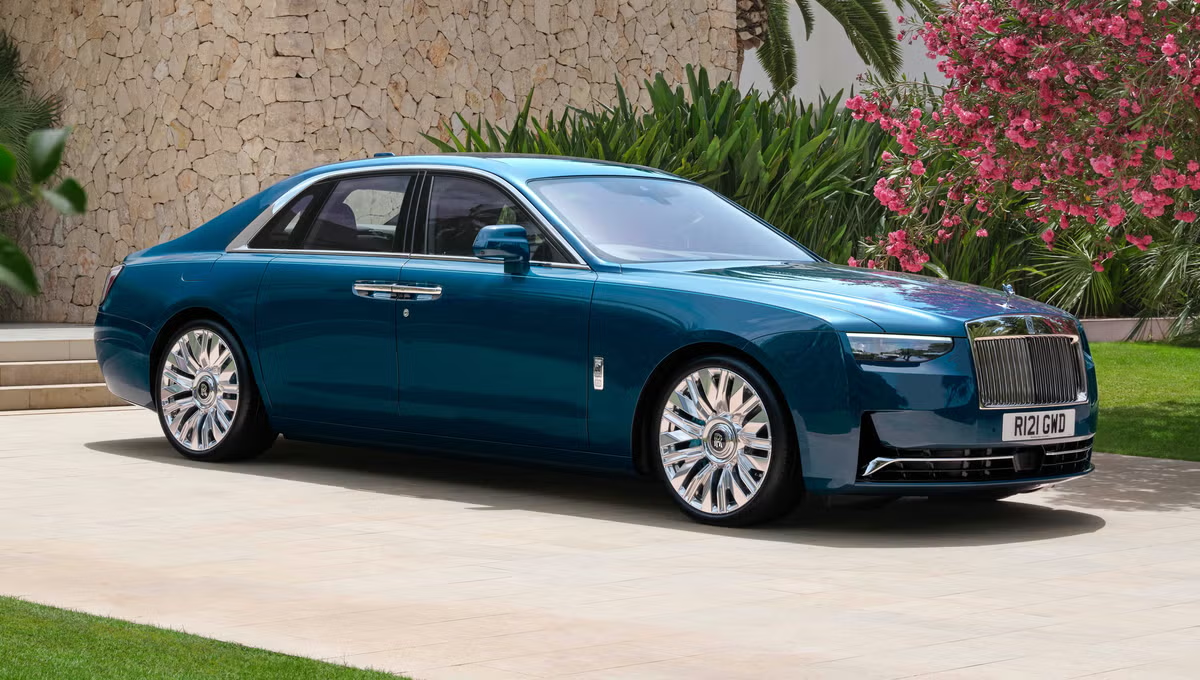
The obvious comparison is Rolls-Royce, and that is precisely why the Celestiq matters. Cadillac is asking Rolls-Royce money for a hand-built electric hatchback from Warren, Michigan. That sounds absurd until one remembers that Cadillac has made absurdity productive before. The Seville was expensive because Cadillac wanted it to be expensive. The 1967 Eldorado put front-wheel drive under Bill Mitchell’s cleanest formal surface. The 1957 Eldorado Brougham cost more than a Rolls-Royce Silver Cloud and existed because General Motors wanted the world to see what Cadillac could do when cost accounting was asked to sit quietly in the corner.

The deeper one goes into Cadillac history, the clearer the rule becomes. Cadillac was never strongest as a cheaper alternative to European luxury. It was strongest when it offered its own vocabulary of power, silence, scale, and mechanical drama. The V12 and V16 cars of the 1930s were not apologies for American excess. They were the argument for it.

The Celestiq is Cadillac attempting to recover that logic in electric form. It is not about volume. It is not even, narrowly, about the car itself. It is about whether Cadillac can again build a machine so deliberate that the brand around it becomes more credible.

The name itself began as an act of invention. Antoine Laumet, a provincial lawyer from Gascony, arrived in the French colonies and refashioned himself as Antoine de la Mothe, sieur de Cadillac. He borrowed the name from a minor château, invented a coat of arms, supplied himself with a noble lineage, and let confidence do what documentation could not.
Cadillac, the man, was not noble in the way he claimed. Cadillac, the brand, had to earn the grandeur its name implied.
The automotive Cadillac did not become “The Standard of the World” because the name sounded aristocratic. It became that because Henry Leland treated precision as a moral obligation and because early Cadillac engineering made that claim mechanically defensible.

In 1701, Cadillac founded Fort Pontchartrain du Détroit, the settlement that became Detroit. Two centuries later, Leland’s company adopted the name not because Antoine was a model of virtue, but because he offered a useful myth: French, elevated, slightly fraudulent, and durable enough to survive inspection from a distance.

That myth would have collapsed quickly if the cars had not justified it. Prestige without substance becomes costume. Cadillac’s great eras understood that. Its worst eras tried to sell the costume after the tailoring had gone bad.

Leland’s Cadillac gave the borrowed name its first real foundation. The company was formed in 1902 from the remains of the Henry Ford Company and built its identity around machining accuracy rather than decorative grandeur. That was the essential Cadillac paradox: aristocratic imagery supported by industrial discipline.
When Cadillac later built the Celestiq inside GM’s Technical Center in Warren, less than 30 miles from the old Detroit origin story, the geography became almost too neat. The name began with invented nobility. The brand became credible through engineering. The Celestiq asks whether that combination can work again.
It can, but only if Cadillac remembers that a flagship cannot be an isolated stunt. It must be the most visible expression of a governing philosophy.
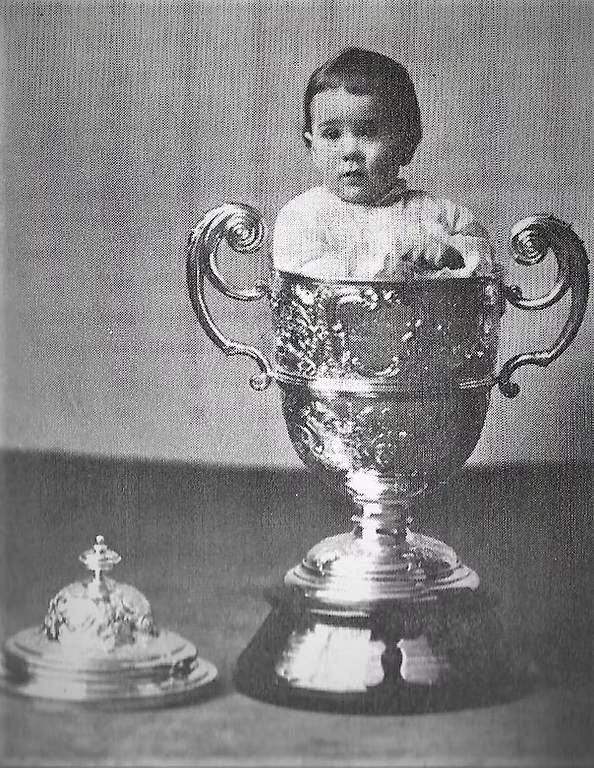
The Dewar Trophy is where Cadillac’s myth hardened into fact. In 1908, Royal Automobile Club judges disassembled Cadillacs, mixed their parts, reassembled them, and found that the cars worked without hand-fitting. That was not glamour. It was interchangeability elevated into prestige. Cadillac did not merely say it was precise. It proved precision in public.

The Eldorado Brougham was the same impulse expressed through postwar abundance. Four doors without a B-pillar, air suspension, a stainless-steel roof, electric conveniences, elaborate interior fittings, and a price designed less to recover cost than to assert rank. It was excessive, fragile in places, and strategically brilliant. Nobody needed a perfume atomizer in the glovebox. That was precisely why it mattered.

For decades, Cadillac’s public meaning was simple. It was the American luxury car one bought after arriving. The cars were large, quiet, expensive, and socially legible without explanation. Cadillac did not need to chase European manners because it had its own.
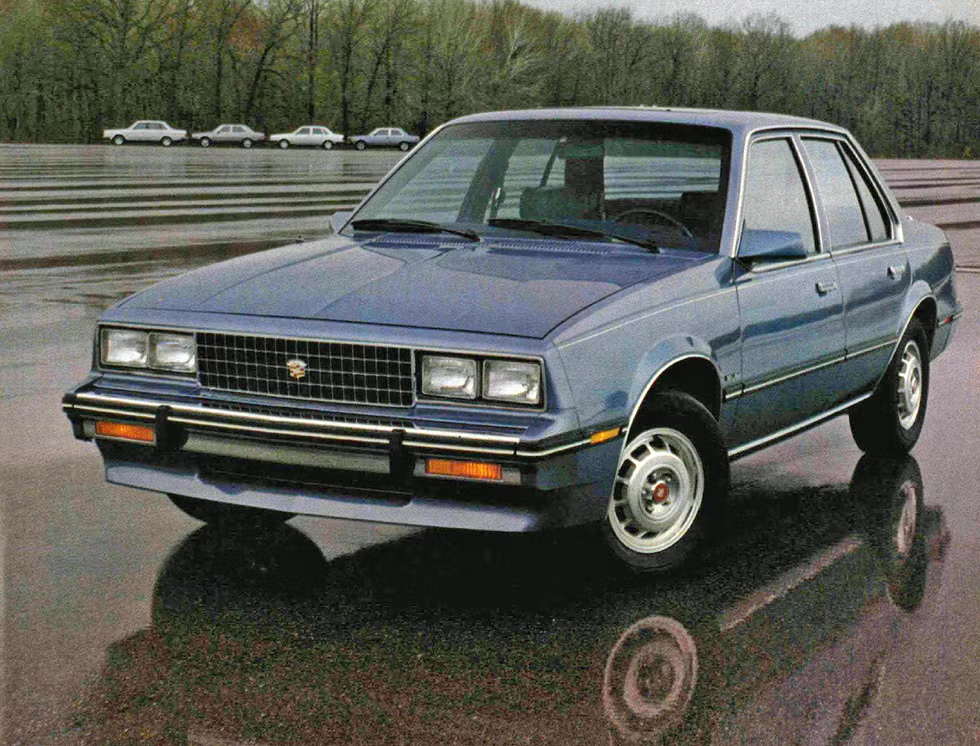
The damage came when Cadillac confused cost reduction with modernization. The Cimarron was not corrosive because it was small. The Seville had already proved that a smaller Cadillac could work. The Cimarron was corrosive because it asked buyers to treat a lightly disguised economy car as a premium sedan. It was not ambition. It was accounting wearing jewelry.
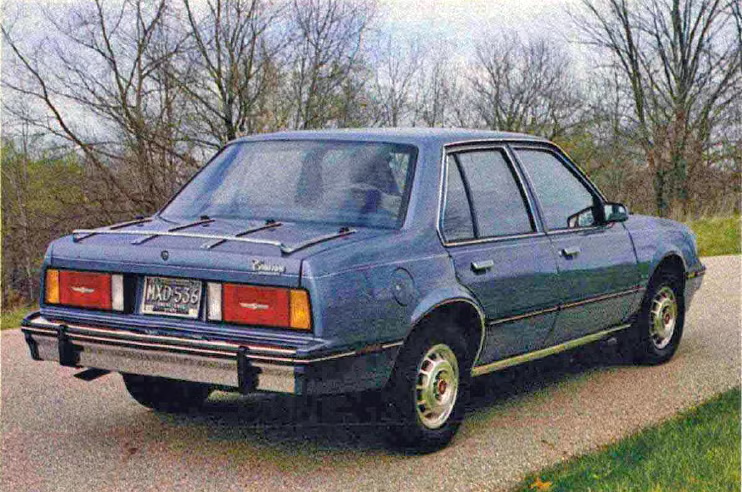
That distinction is the center of Cadillac’s prestige problem. A luxury brand can survive a bad car. It has a harder time surviving a car that reveals contempt for the buyer. The Cimarron taught buyers to suspect the badge because the product made the intent visible.

The Allanté tried to reverse the damage with theater: Pininfarina bodywork, an air bridge from Italy, and a price aimed at the Mercedes-Benz SL. The spectacle was real. The underlying product was not equal to it at launch. Cadillac had remembered pageantry before it had recovered execution.

The XLR repeated the pattern in sharper clothes. It had legitimate hardware, striking proportions, and a plausible flagship brief, yet it failed to deliver the interior quality required by its price. Cadillac could still build interesting cars. It kept failing to make the whole experience cohere.
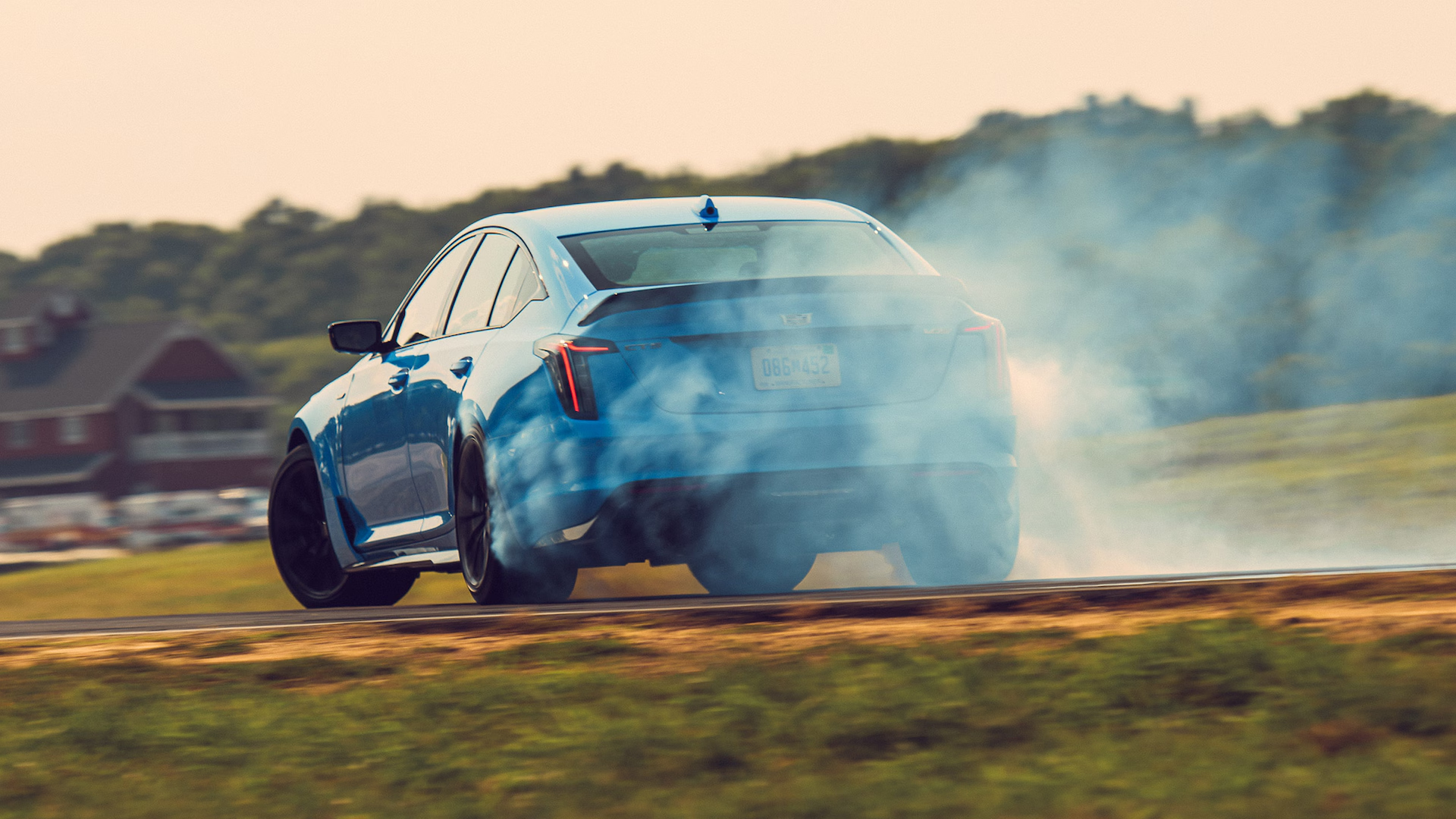
The Blackwing sedans prove the engineering talent never disappeared. The CT5-V Blackwing is not a nostalgic curiosity. It is a world-class performance sedan with a supercharged V8, rear-wheel drive, and an available manual transmission at a moment when most of the industry treats driver involvement as a compliance risk. Cadillac can still build a car with nerve.

The Lyriq gives the other half of the answer. Cadillac’s future cannot be only a farewell tour for combustion heroes. It needs electric products that feel like Cadillacs rather than electrified appliances with crests attached. The Lyriq showed that the brand could translate quietness, ride quality, and visual presence into the EV era without adopting Tesla’s furniture-store minimalism.
That is why the Celestiq cannot be treated as a standalone curiosity. It must be the top of an intelligible hierarchy: Lyriq proving electric Cadillac can work at scale, Blackwing proving Cadillac still knows how to engineer desire, and Celestiq proving the brand still remembers how to be extravagant without sounding embarrassed.
The earned myth

Cadillac Motor Car Company opened in Detroit in 1902, and the early company’s genius was not excess for its own sake. It was exactness. The brand’s first great prestige move was not a V16, a tailfin, or a limousine. It was the disciplined production of parts that fit together without artisanal pleading.

General Motors acquired Cadillac in 1909 and kept Leland’s precision culture intact long enough for the company to win its second Dewar Trophy with the electric self-starter. That matters because Cadillac’s prestige was never merely decorative. The best Cadillacs changed expectations about what luxury equipment should do.

The early V8 reinforced that pattern. Cadillac was not building performance cars in the modern sense. It was building effortlessness into machinery, making power feel civilized, repeatable, and expensive. That remains the relevant precedent for the Celestiq. Luxury technology has to disappear into experience before it deserves the name.