VII. Disruption and Experimentation: The BMW E65/E66 7 Series

When BMW unveiled the E65/E66 in 2001, it detonated its own success. The company replaced the widely loved E38 with a car designed to redefine luxury through styling, electronics, and systems integration rather than restraint. iDrive, active anti-roll control, electronic key, night vision, and the first direct-injected production V12 made the point immediately. The new 7 Series was not evolutionary. It was a deliberate rupture.

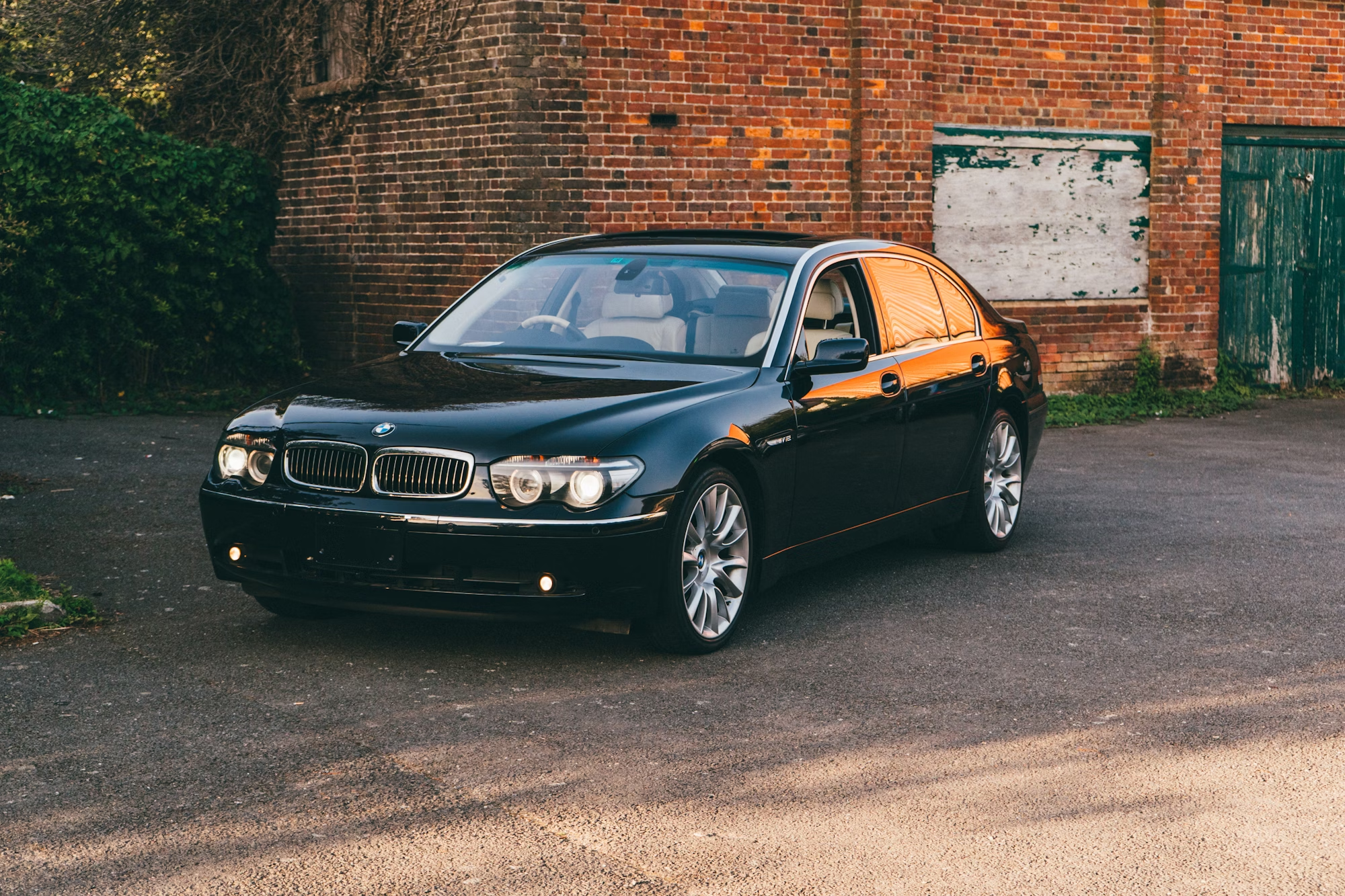
Chris Bangle’s design leadership and Adrian van Hooydonk’s surface language broke hard with the 1990s BMW template. Flame surfacing, the high decklid, the heavy rear volume, the altered face, all of it came off as provocative to people accustomed to the E38’s discreet discipline. The “Bangle Butt” nickname stuck because it was simple and not entirely unfair. Many loyalists hated the car on sight.

BMW management stood behind it because the break was intentional. Safety, packaging, aerodynamics, trunk volume, and the taller engine bay all pushed the car upward and outward. Bangle argued that the rear volume was less indulgence than consequence. Dealers grumbled, then mostly accepted the wager. A few years later, rival luxury sedans had moved in the same direction while politely denying the source.

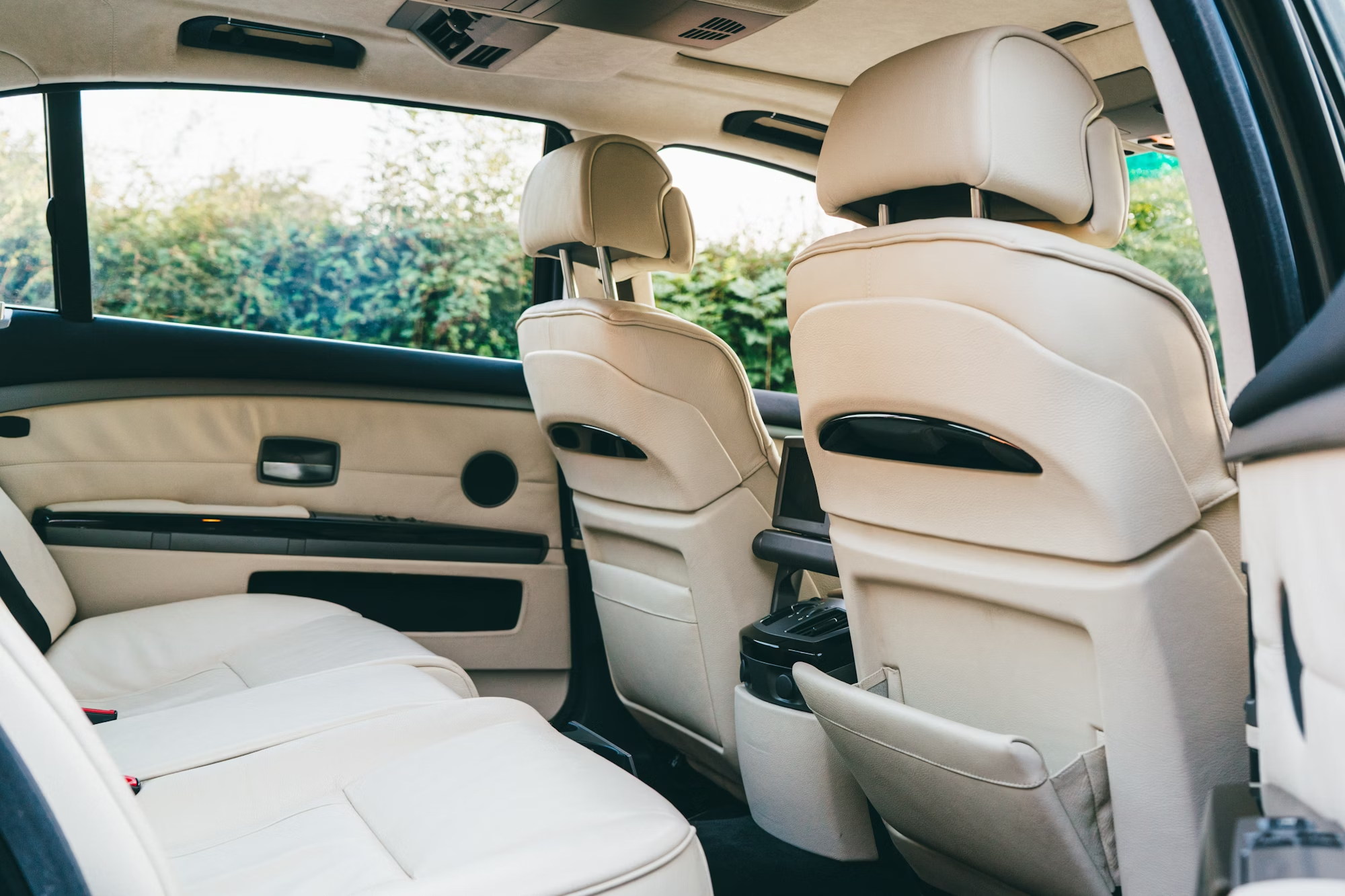
Inside, the rupture was just as total. BMW abandoned the driver-canted dashboard, moved the shifter to the steering column, centralized information in the screen, and relocated familiar controls to unfamiliar places. It no longer looked like the cockpit of a classic BMW. It looked like the control room of a new kind of luxury car, which was exactly what the company intended.

That philosophy was simple even if the first execution was not: show information high, simplify the lower dash, and let a central controller handle growing electronic complexity. BMW traded the intimacy of old ergonomic habits for a more spacious, digitally mediated cabin. Traditionalists hated that trade. Time has been kinder to it than the launch press was.
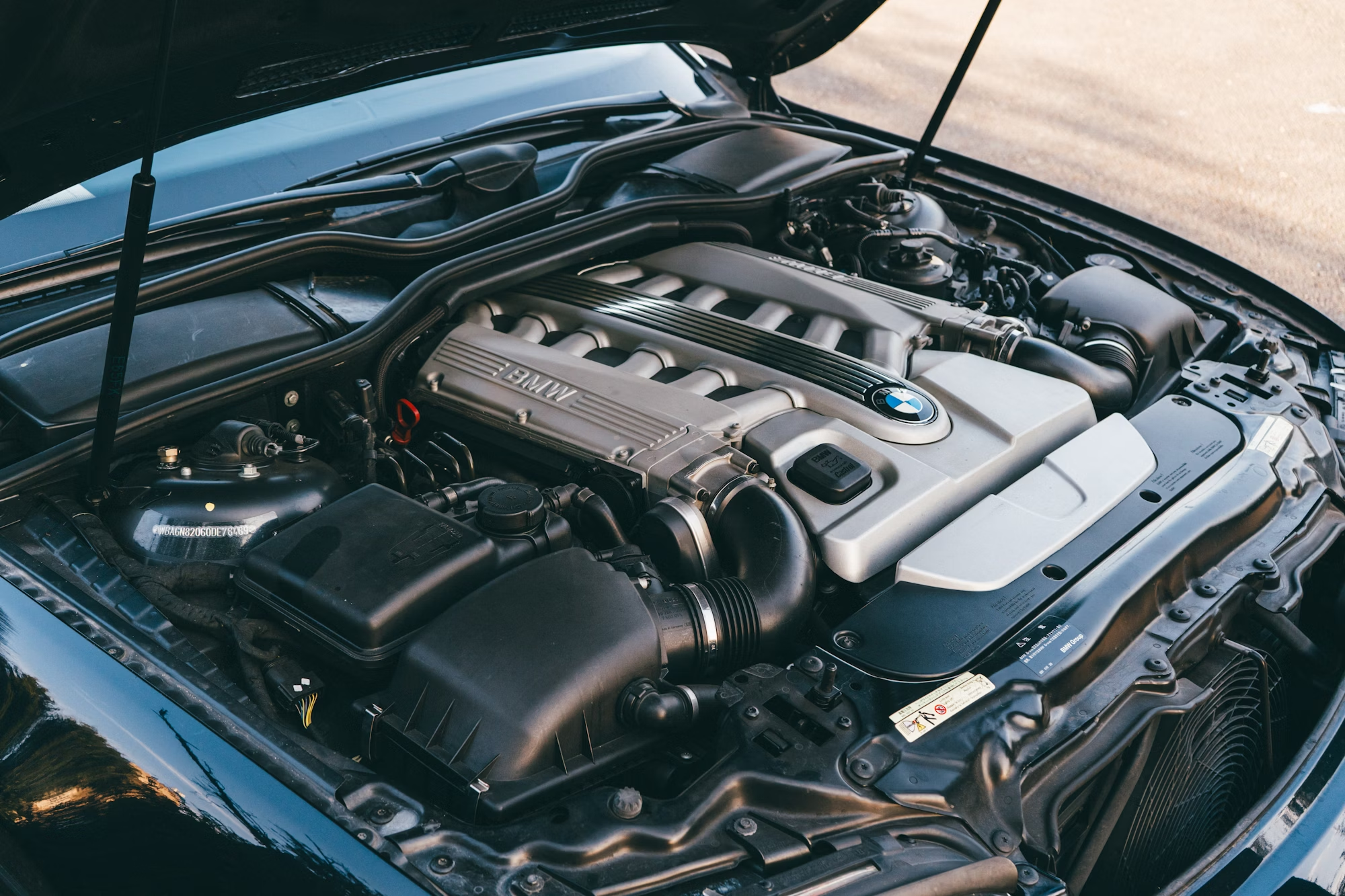
The engineering underneath justified much of the audacity. The N73 V12 replaced the old M73 with a 6.0-liter all-alloy, 48-valve, direct-injected, Valvetronic-equipped engine of far greater ambition. Dual VANOS, twin ECUs, and an entirely new breathing strategy gave BMW the world’s first production V12 with gasoline direct injection. Output rose to 445 horsepower and 443 lb-ft. More important, the engine delivered its torque with the calm, linear authority expected of a flagship 12, even as competitors turned to forced induction.
BMW paired the new engine with another industry first, ZF’s 6HP 6-speed automatic, and backed it with Dynamic Drive, adaptive damping, self-leveling air support at the rear, and an aluminum-intensive suspension. The result was a large sedan that could corner flatter and change direction more eagerly than any car of its size and equipment had a right to. The E65 did not feel like an old-style luxury car learning technology. It felt like a technology platform that happened to be luxurious.

The new V12 entered a field that was also evolving fast. Mercedes’ M137 had already modernized the S600, and the later twin-turbo M275 moved the segment toward effortless torque rather than intricate natural aspiration. Volkswagen Group pursued its compact W12 across Audi, Volkswagen, and Bentley. Lexus stayed with V8s and hybrid logic. Toyota even built a V12 Century for Japan and kept it a domestic secret. The early 2000s split the top end of the market into 2 camps: those who still believed a flagship needed 12 cylinders, and those who had already decided the cylinder count was negotiable.

Volkswagen’s W12 deserves mention because it was clever, compact, and unmistakably corporate in spirit. By joining 2 narrow-angle VR6s on a common crank, VW created a 12-cylinder package shorter than a conventional V12 and easy to spread across multiple brands. It worked, but it never had the inherent dignity of a true 60-degree V12. It was an ingenious solution. BMW’s engine still felt like a flagship.

That left BMW and Mercedes as the only major European companies still treating the V12 as the natural summit of the luxury-sedan range. Everyone else was already looking for other ways to arrive.

The Century’s 1GZ-FE showed that even Toyota understood the symbolic force of a V12 in a formal limousine. It also showed how local and ceremonial the configuration had become outside Germany. BMW, by contrast, was still treating the V12 as a central part of its mainstream flagship identity.
The iDrive Infotainment Revolution: Innovation and Backlash

Nothing about the E65 stirred more immediate argument than iDrive. BMW replaced a dashboard full of discrete buttons with a single controller, a screen, and a menu tree meant to rationalize the exploding complexity of modern luxury cars. The logic was sound. By the late 1990s the conventional control surface was becoming unmanageable. BMW decided that software, not more switchgear, was the future.

At launch, the future was irritating. First-generation iDrive demanded menu navigation for tasks that previously required muscle memory and a single hand movement. Early software was slow enough, glitchy enough, and abstract enough to convince plenty of drivers that BMW had mistaken cleverness for usability. Some customers bought remaining E38s instead. Others learned the system and stayed. BMW even had to buy back or warranty some early cars in North America as the electronics suite revealed too much complexity too quickly.

Yet the industry’s response told the real story. Audi answered with MMI. Mercedes evolved COMAND toward the same basic architecture. Every luxury brand soon adopted the principle of a central screen and master controller, then later touch integration. BMW had been early, clumsy in places, and right. iDrive survived because the idea was larger than its first execution.
Press and Competition
The E65 launched into one of the most skeptical premium-sedan markets in history and earned every reaction available: admiration, ridicule, anger, fascination, and eventually acceptance. Launch reviews almost all split the same way. The car’s engineering was difficult to dismiss. Its styling and interface made dismissal tempting anyway.

In the United States, where the E38 had built a loyal following for understatement, the new car faced the harshest reception. Many buyers preferred the safer aesthetics of Lexus or Mercedes. The American press often treated the 7 Series as both breakthrough and self-inflicted wound. Even supportive reviews usually sounded exasperated:
BMWs are apparently for smart people. How else can you explain the many puzzling control mechanisms in the 750Li? From the often-dissed but undoubtedly versatile iDrive to the weird seat controls to rear switches that toggle between window and power-sunshade control, the whole car is full of devices that require research and experimentation, but they offer considerable convenience to a resourceful driver once they’re all figured out.
That ambivalence was real, but so was the market result. The E65 sold. Early software fixes, improving familiarity, and the sheer force of the car’s performance helped. The 7 Series even outsold the S-Class in some periods. By the facelift years, the failure narrative had ceased to match either the numbers or the way competitors had already adapted to its worldview.

Europe reacted differently in tone but not in substance. German and British buyers were just as startled by the styling and just as unsure about iDrive, and some quietly bought late E38s instead. Yet volume recovered quickly. The E65/E66 ultimately became the best-selling 7 Series generation to that point, with 343,073 built. That matters. Controversial is not the same thing as commercially misguided.
From a strategic perspective, the car now looks even more significant. BMW was running a 2-level luxury program: the 7 Series pushed innovation and volume in the premium segment, while Rolls-Royce handled the ultra-luxury summit. Mercedes tried to answer from both directions with the S-Class and the revived Maybach. The former remained formidable. The latter burned money with almost academic thoroughness. BMW’s architecture was the smarter one.

In retrospect, the E65/E66 looks like another hinge point. It was the best-selling 7 Series ever at the time not because everyone suddenly loved its trunk, but because BMW correctly understood where the segment was heading. Large screens, controller-based infotainment, active chassis systems, bold surfacing, software-defined luxury, and the idea that a flagship must be a technology demonstrator first all passed through this car on their way to becoming normal. The E65 was not beautiful in the E38 way, and it was never going to be loved in the same reflexive manner. It was something harder and more consequential. It dragged the future into the room before everyone had agreed to let it in.